

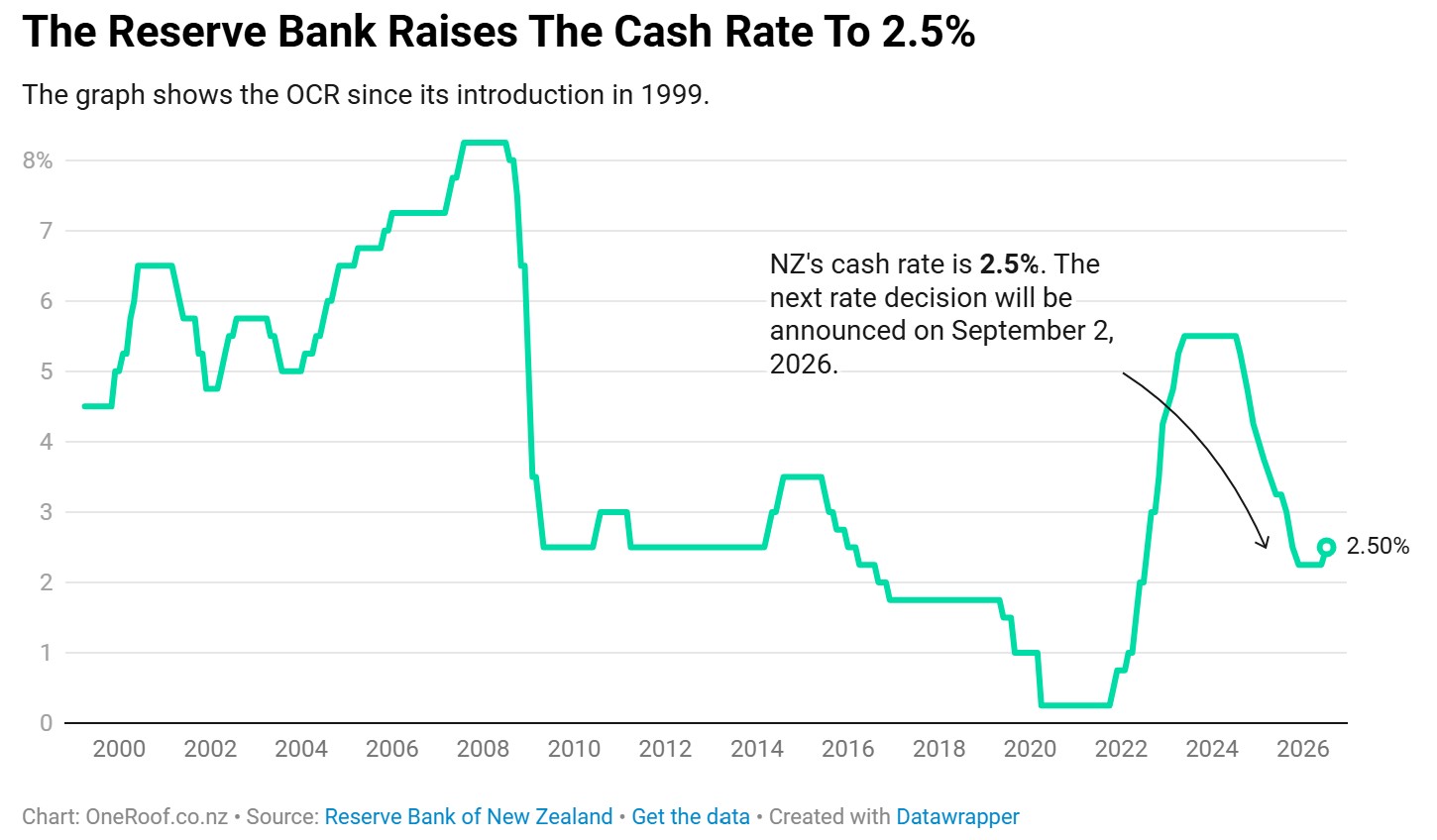
Global uncertainty - rising oil prices, Middle East conflict, and a shifting domestic economy - is putting upward pressure on home loan rates in New Zealand. OneRoof spoke to housing market experts following the June quarter Consumer Price Index data, which showed annual inflation at 4.1%, its highest point in two years.
The broad message from economists was measured: rate rises are likely, but not severe. Much of the expected OCR movement had already been priced into bank fixed terms. Floating rates were forecast to reach around 6.4% by year's end, with one-year fixed rates expected to peak around 5.5% by 2028. For a household carrying a $700,000 loan, the modelled impact was an additional $290 per month - real money, but manageable with the right structure in place.
Jeremy Andrews, director of Key Mortgages in Whangarei, recommends fixing for two years. While the six-month rate was around half a percentage point cheaper, he says the extra cost is a small price to pay for security. "If you want to go even longer, like for three years, you have to pay another 0.3 percentage points [each year] for that extra year. That's why we suggest two years as a good option." Fixing for five years risked being caught on the wrong side if rates eased sooner than expected.
Beyond the term question, Jeremy is clear that trying to perfectly time the market misses the point. "No one can consistently predict exactly where interest rates will be in six or twelve months' time. Rather than trying to pick the bottom of the market, borrowers are generally better served by having a lending structure that provides flexibility while balancing certainty and future opportunities." That means reviewing the overall loan structure and long-term financial goals - not just chasing the lowest advertised rate.
For borrowers currently in a fixed term, the maths may already be working in their favour. Key Mortgages' break cost calculator has recently been showing that breaking and refixing stacks up for many clients - worth checking before assuming it's not worth the effort. As Jeremy put it: "I think it's only a matter of time before banks do increase those fixed rates again."
Full article here: Interest rate warnings: How much extra could you be paying by the end of the year? - OneRoof
Global uncertainty is pushing interest rates up. Key Mortgages director Jeremy Andrews tells OneRoof why fixing for two years makes sense right now - and why the window won't stay open long.

The Otago Times describes a Dunedin woman with $90,000 in KiwiSaver still can't buy a home in part due to strict asset caps. Key Mortgages explains when KiwiSaver can help second-chance buyers.
RNZ asked Jeremy Andrews of Key Mortgages whether first home buyers are better off making extra regular repayments or saving up a lump sum. Getting it right could save years off your total mortgage.
Key Mortgages advise 1news how homeowners could significantly reduce long-term mortgage interest by making simple repayment adjustments and reviewing loan structure regularly.
Key Mortgages comments with Tony Alexander and TMM Online the prospect of whether rising interest rates and global tensions are prompting a more cautious approach from buyers. Is mortgage demand softening as households take time to reassess affordability and market conditions?
NZ Banks are offering cash incentives to retain existing home loan clients. Jeremy of Key Mortgages summarizes with NZ Herald, whether to switch or stay depends on factors like break fees, equity, and overall costs. We can help and negotiate with your current bank to find which is the smarter move.


.svg)
.svg)
